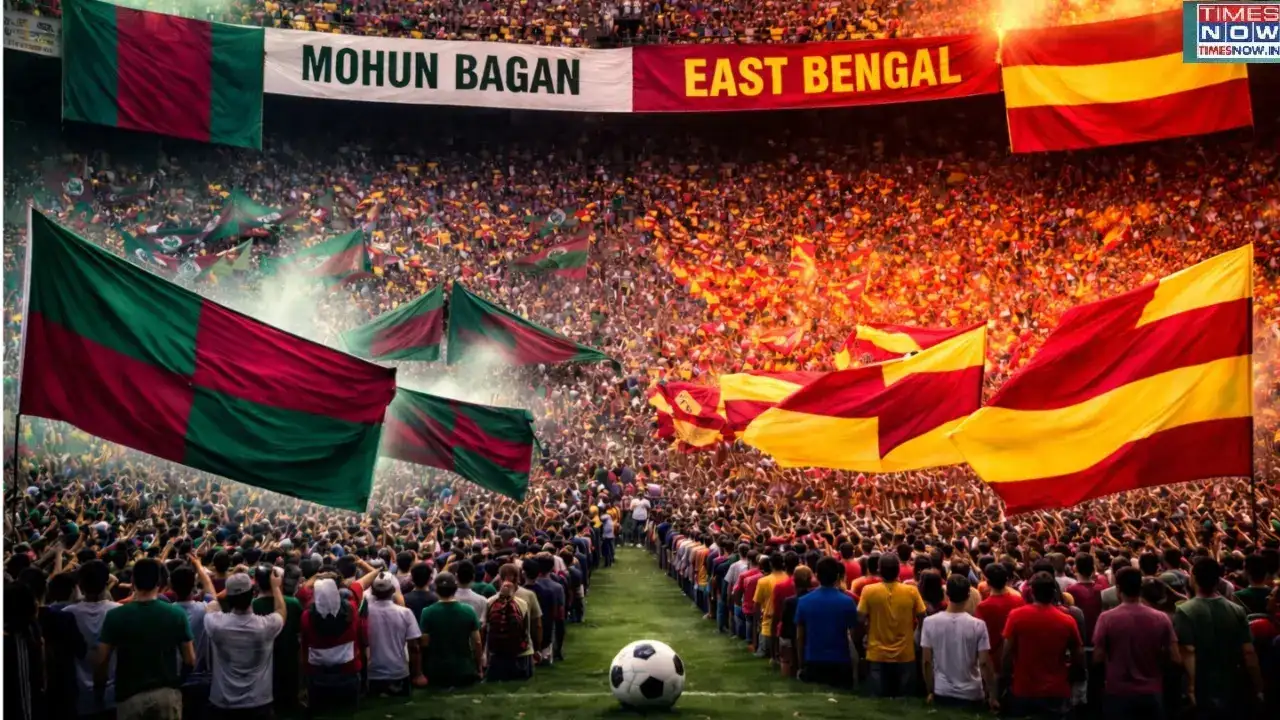
After months of uncertainty, the Indian Super League is finally set to begin from February 14. However, as the Indian football calendar resumes, a momentary lapse of tongue from the topmost figure in Indian sports administration briefly shifted attention away to something more fundamental. The giants of Indian football, Mohun Bagan and East Bengal were referred to as ‘Mohun Baigan’ and ‘East Baigan’.
Mohun Bagan and East Bengal are not mere clubs. They are institutions that predate the Indian republic, shaped the national team long before professionalism arrived and carried Indian football through decades. To understand what these two clubs mean requires returning to what they represent and why familiarity with them is not optional.

Mohun Bagan: Where Indian Football Learned to Believe

In 1911, Mohun Bagan did something that no trophy cabinet can fully capture. They defeated the East Yorkshire Regiment, becoming the first all-Indian team to win the prestigious IFA shield.

This was not simply a footballing upset. It was an image that burned itself into the consciousness of a colonised people. Indian players, many of them barefoot, defeated representatives of the British empire that ruled them. No speeches followed, no flags were raised, yet an irreversible shift occurred.
Mohun Bagan showed that organisation, belief, and courage could confront authority and win. Long before India gained independence, dignity was reclaimed on a football pitch in Calcutta. That is why Mohun Bagan is not remembered only for what it won, but for when it won.
In Mohun Bagan, Indian football found its spine.
Players like Gostha Pal, one of Asia’s earliest defensive greats, defined reading of the game and leadership. Chuni Goswami brought elegance and control, becoming the face of Indian football in the 1950s and 60s. Jarnail Singh, equally effective in defence and midfield, embodied tactical versatility decades before it became fashionable.
Mohun Bagan players did not simply wear the national jersey. They shaped how India understood football.
East Bengal: Football Forged Through Displacement
If Mohun Bagan was born from defiance, East Bengal was born from rupture..
Even though East Bengal was formed in 1920, the club truly found its soul in 1947. The Partition did not merely redraw borders. It displaced millions, fractured identities, and left behind a trail of grief that refused to fade. East Bengal Football Club emerged from that upheaval, becoming a cultural refuge for those who had crossed borders from East Pakistan to West Bengal, carrying loss more than luggage.
Supporting East Bengal was never just about results. It was about belonging and about continuity when geography failed. The red and gold colours carries stories of migration, survival, and the determination to rebuild life with dignity intact.
Where Mohun Bagan symbolised early resistance, East Bengal symbolised endurance. Together, they completed Indian football’s emotional vocabulary.
Kolkata Derby: Asia’s Biggest Rivalry
The Kolkata Derby is not merely Indian football’s biggest fixture. It is Asia’s most enduring and ferocious rivalry.
For over a century, Mohun Bagan versus East Bengal has been less a match and more a phenomenon. Long before packed European derbies became global television events, Kolkata was drawing six-figure crowds, paralysing the city, and turning football into an all-consuming social event.
Streets emptied, workplaces slowed, families split loyalties across generations. The city did not host the derby. It surrendered to it.
For decades, the derby served as Indian football’s most brutal classroom, producing players hardened by expectation and immune to pressure.
Why The Names Matter
Mohun Bagan and East Bengal are not just mere team names. They are cultural institutions. Their names carry stories of barefoot defiance, refugee resilience, packed galleries, and inherited loyalties. When they are spoken casually or incorrectly, it reveals distance, not malice. Distance from the struggles that built Indian football.
Some names are not difficult to say. They are difficult to earn. When we speak of Mohun Bagan and East Bengal, the least India can do is remember what they gave to football and say their names like they deserve to be said.